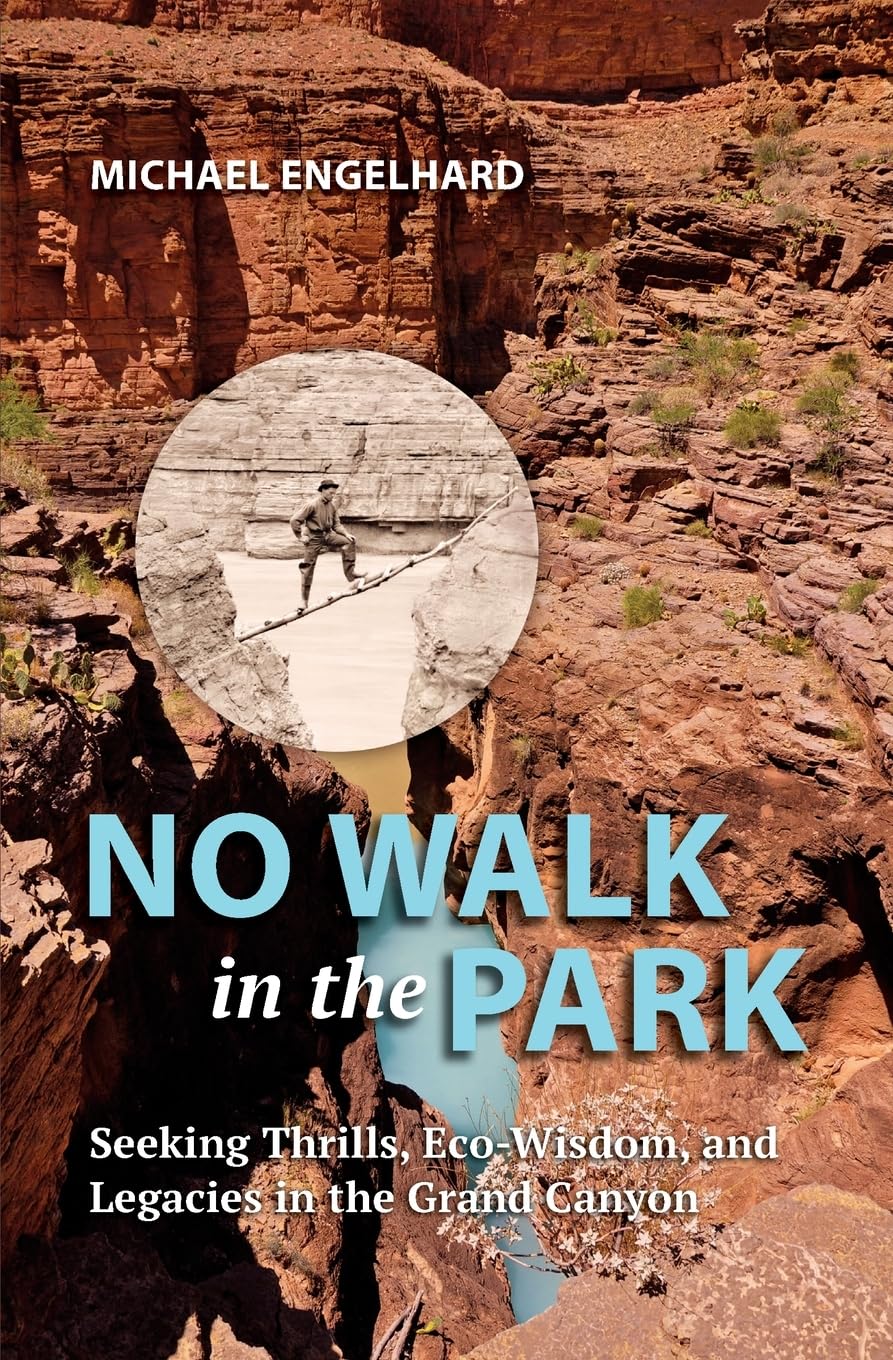
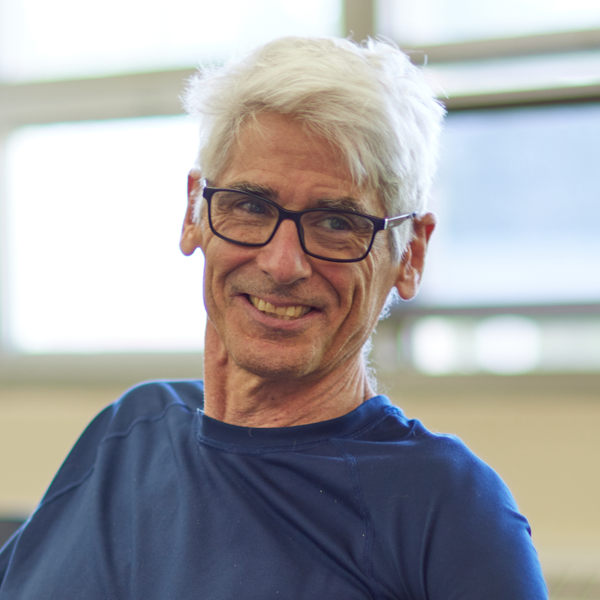
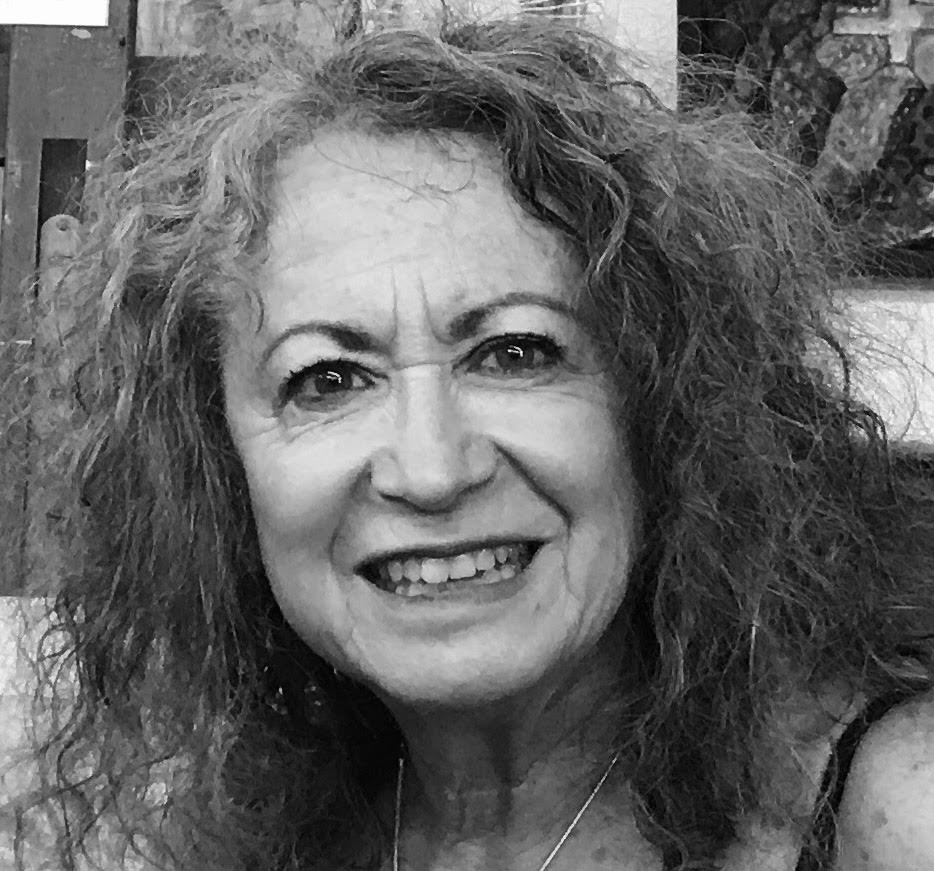
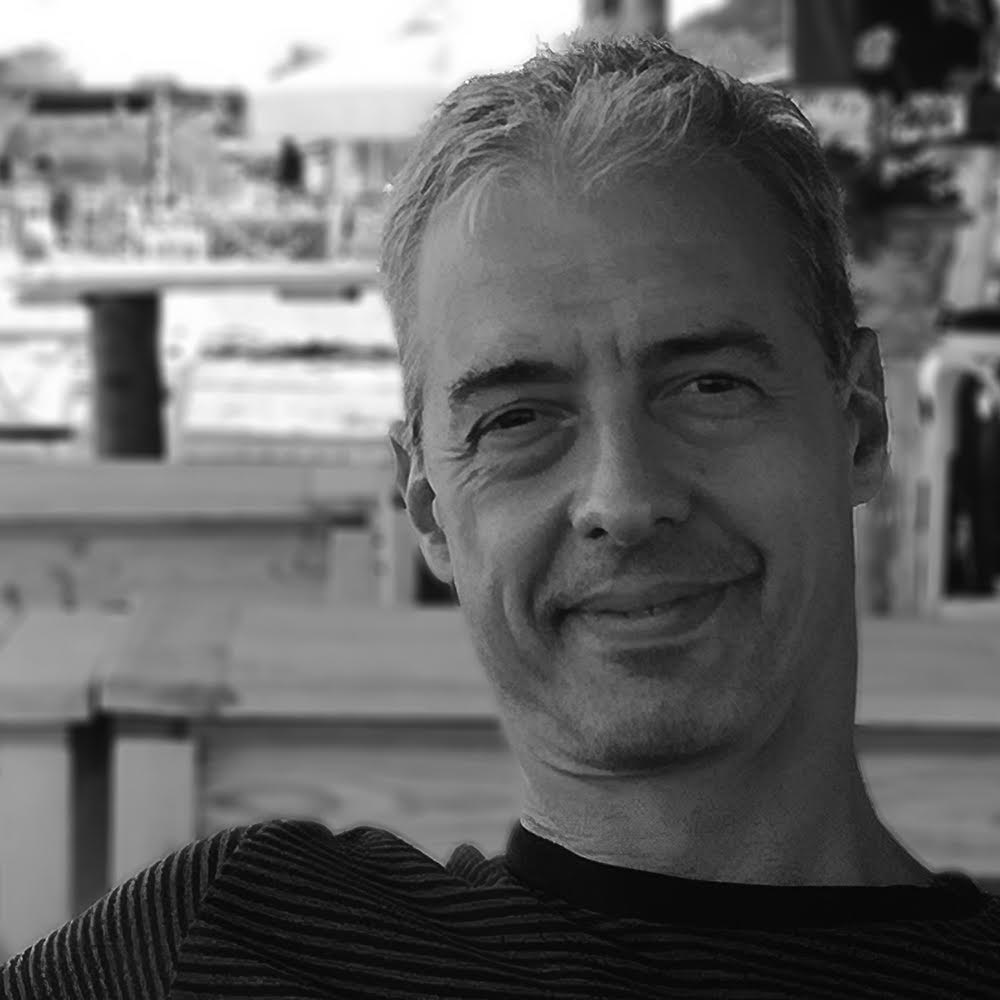
“Tread lightly on this storied pavement,” (20) because you might just stumble across the most thrilling nature read of the year. Congratulations to Michael Englehard on his upcoming publication! His essay collection, No Walk in the Park, is available for preorder now, online or at your local bookstore. It will be released through Corax Books on May 1st.
Join this author on a night hike to the great chasm’s bottom; trek forty days in his company below one rim, or snowshoe the other; visit a Hopi mesa for a ceremony; marvel at hidden rock art; sip epic solitude; tag threatened fish; and float next to Glen Canyon’s slickrock or Niagara-size fleeting falls. These essays by an award-winning writer and student of culture sift decades of experience backpacking and boating for a stance that questions the mainstream. More than mere tales of bravado, they offer glimpses into the heart of the places explored, with the Grand Canyon as their center of gravity.
His collection has received wonderful reviews:
“Engelhard’s creative wit and deep understanding of our earth make this a mesmerizing read.”
—RICH INGEBRETSEN, co-founder Glen Canyon Institute
“Avidly urges the reader to side with nature rather than continue to celebrate the foibles ofour over-abundant, misguided species.”
—JACK LOEFFLER, author of Pagan Polemics
“Engelhard’s love song to America’s most beautiful desert.”
—SEAN PRENTISS, author of Finding Abbey
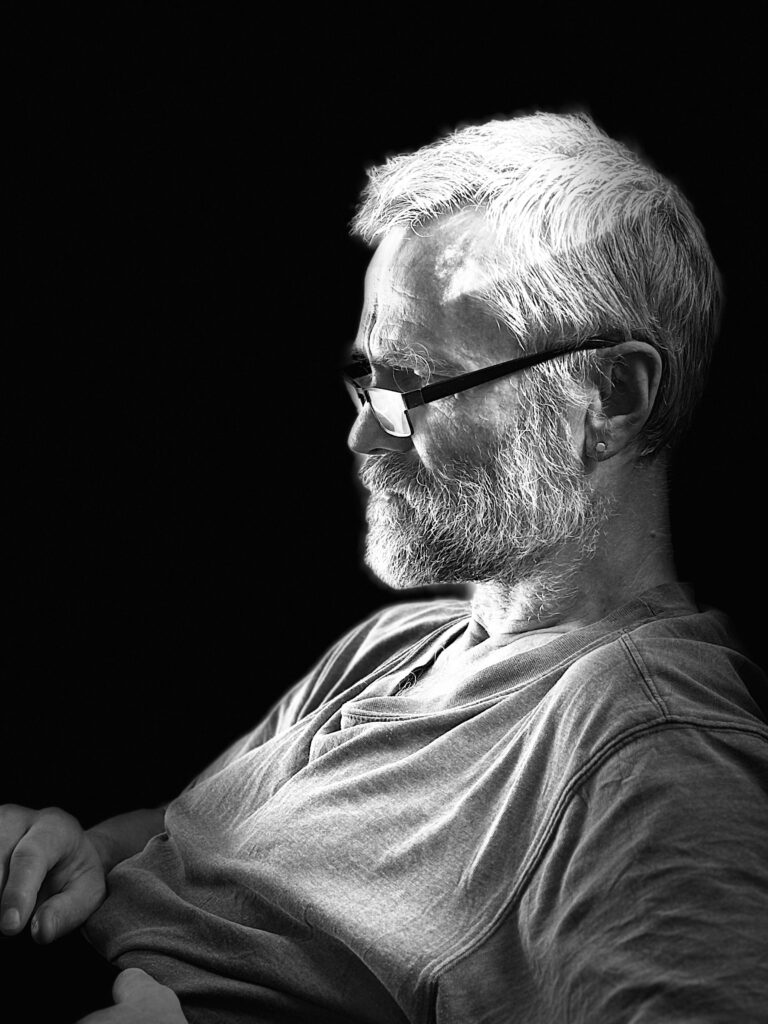
Trained as a cultural anthropologist, MICHAEL ENGELHARD worked twenty-five years as a wilderness guide and outdoor educator in the canyon country and arctic Alaska. In addition to No Walk in the Park, his latest books also include Arctic Traverse, a memoir of a solo Brooks Range trip from Canada’s Yukon border to the Bering Strait, and the essay collections What the River Knows. A former Flagstaff resident now living in a cabin on the outskirts of Fairbanks, Alaska, he dreams about relocating to the Southwest—especially on those minus-fifty-degree days.
Warmest congratulations to previous contributor, Dorsía Smith Silva on the publication of her debut poetry book! CavanKerry Press will publish In Inheritance of Drowning, in November 2024. It is available to preorder now!
Her book examines Hurricane María which devastated Puerto Rico in 2017, as well as exposing and examining the multiple sources of oppression in the United States.
In Inheritance of Drowning has already received significant attention:
“In Inheritance of Drowning looks unflinchingly at violence and iniquity while testifying to Black and Caribbean people’s survival.”
Shara McCallum, author of No Ruined Stone
“This is a voice that understands “fret” sounds like “forget,” especially as winds and waves accrue, along with lost brown and black bodies. Page after page, this overwhelming rush of rivers and blood remind us we must not forget, as the list of names grow[s] like a gathering storm, that those bodies swirl further and further away from their names.”
Frances richey, author of The Warrior: a mother’s story of a son at war, and the burning point
You can read Dorsía’s poems, “At the Hour before Hurricane María,” “Sunday Drive,” and “Uncaged” in Issue 29 of s[r]. Or her poem “Columbus 2020” in Issue 26.
Dorsía Smith Silva is an eight-time Pushcart Prize nominee, Best of the Net finalist, Best New Poets nominee, Cave Canem Poetry Prize Semifinalist, Obsidian Fellow, Poetry Editor at The Hopper, and Full Professor of English at the University of Puerto Rico, Río Piedras. Her poetry has been shortlisted for the Queen Mary Wasafiri New Writing Prize and has been recently published or is forthcoming in Cream City Review, Shenandoah, Terrain, The Ecopoetry Anthology: Volume II, The Cimarron Review, Beloit Poetry Journal, and elsewhere. She has also received support from Bread Loaf and Martha’s Vineyard Institute of Creative Writing and is a member of the Get the Word Out Poetry Cohort of Poets & Writers in 2024. Moreover, she is the author of Good Girl (poetry micro-chapbook), editor of Latina/Chicana Mothering, and the co-editor of seven books. She has a Ph.D. in Caribbean Literature and Language. You can find out more about Dorsía on her website.
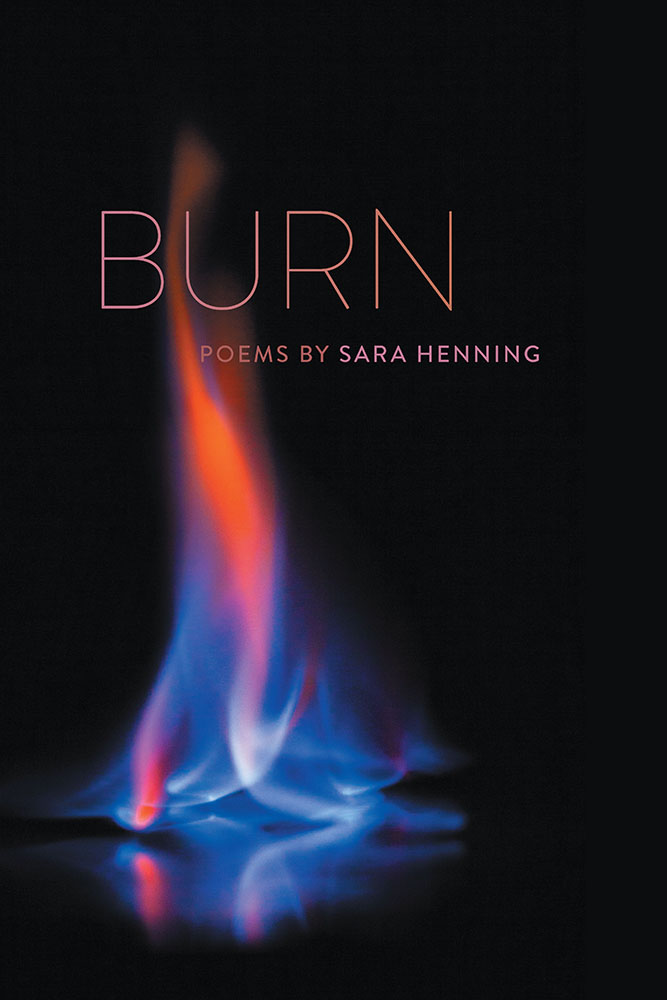
Our heartfelt congratulation go to previous contributor Sara Henning, for the success of Burn, her 2022 Crab Orchard Series in Poetry Editor’s Selection. The collection will be published on April 22 by Southern Illinois University Press. It is available for preorder now! Want to see Sara live? Her reading tour can found on her website, with events on April 19th, 23rd, 25th, 26th, and beyond!
A word from the author: “My journey of writing Burn began after my mother lost her battle with cancer in 2016. Struggling to make sense of time and its role in our lives, I found solace in the words of poet Delmore Schwartz:
What will become of you and me

(This is the school in which we learn ...)

Besides the photo and the memory?

(... that time is the fire in which we burn.)
“Through these poems, I invite readers to consider how we navigate our own flames—do we burn up? Do we ignite with joy or ecstasy? Do we rise like a phoenix from its ashes?”
Burn magnifies the way time leaves us both the victim and the victor of our realities. The blaze of her late mother’s Tiffany lamps sends the speaker back to childhood, where she unearths mica from the schoolyard dirt. The devastation of an ecological crisis, the annihilating act of rape, and the unsolved disappearance of a caretaker all level the speaker’s world and upend her place in it, forcing her to reconstitute reality from what remains. In poems which summon the spirit of Stephen Hawking’s A Brief History of Time, this collection walks through the physics of temporality as refracted through love, loss, and grief, so we better understand its effect on our lives. Through this insight, Henning introduces a new way of being in the world.
Burn has already received glowing reviews:
“When the embers of a blaze drift upward over the spindrifts of a churning time, we receive Henning’s language in curlicues of smoke. The poems in Burn meditate on what comes after the ash, pondering how we must have moved forward with our hands extended outward into the miracle of the open air. Her splendid lyrical words return us again and again to the clearing where somehow, despite it all, we are still able to breathe.”
Oliver de la Paz, author of The Diaspora Sonnets
You can read her poem “Immortelles (2016),” in Issue 32. She has also five poems published in Issue 22. And three in Issue 11.
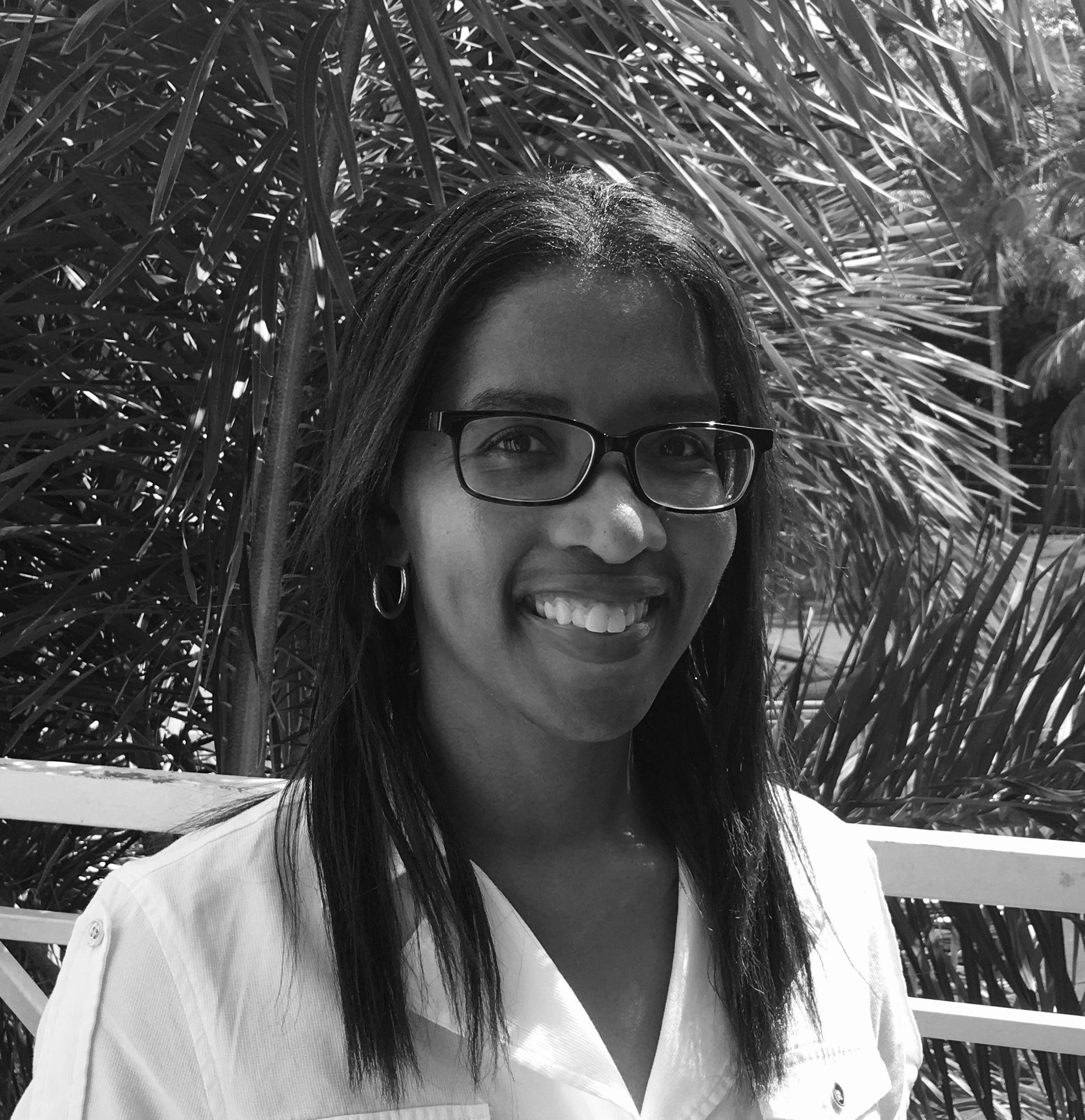
Sara Henning is the author of Terra Incognita and View from True North, which was chosen by Adrian Matejka as co-winner of the 2017 Crab Orchard Series in Poetry Open Competition Award. She was awarded the 2015 Crazyhorse Lynda Hull Memorial Poetry Prize, the 2019 Poetry Society of America’s George Bogin Memorial Award, a 2019 High Plains Book Award, and a Tennessee Williams Scholarship. Her work has appeared in journals such as Alaska Quarterly Review, Southern Humanities Review, Witness, Meridian, and the Cincinnati Review. She is an assistant professor of Creative Writing at Marshall University. You can find out more about Sara on her website.
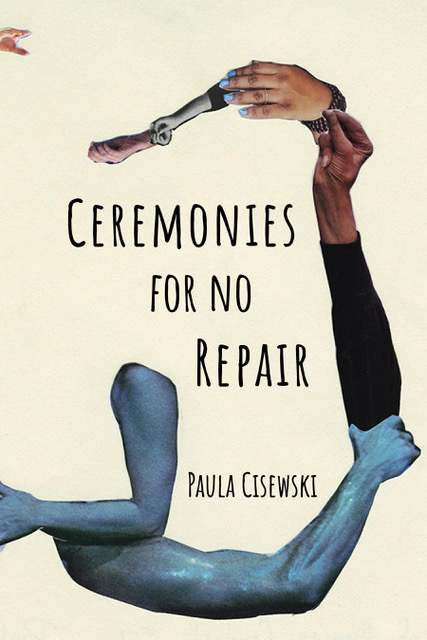
Congratulations to past contributor Paula Cisewski on the publication of her newest book! Ceremonies for no Repair includes Cisewski’s visual art for the first time: prints and fragments of small drawings and comics are interspersed with journal fragments and poems. A heroic crown of sonnets for her mother, who died in June of 2020, weaves through the book as well.
The book was published through Beauty School Editions LLC and is available now for purchase!
In Ceremonies for No Repair, Paula Cisewski challenges us to examine our grief for the depths of our care. Set in the early months of the Covid-19 pandemic, this hybrid of poetry, prose, and images is a collage of personal and universal sorrows: a surprise divorce, an uprising, a mother’s death in quarantine. Less narrative than aggregate, it is a book about staying present and moving both with and through. It is an accrual of small moments and actions that, together, gesture toward hope.
Additionally, you can hear Paula read her work at the New Orleans Poetry Festival on Sunday, April 22nd at 2pm.
Ancestress: A Reading that Echoes Forward
This reading panel, featuring poets Darius Atefat-Peckham, Paula Cisewski, Angie Mazakis, and Danika Stegeman, formed around the idea of the “Ancestress,” as illuminated in the Bjork song from her 2022 album Fossora. The idea of the ancestress explores the ways we evolve from and carry our mothers as well as broader ideas of birth, mothering, and the feminine forward in time. Our mothers survive pain and violence while also creating life and/or healing in the face of those things. The readers come from diverse backgrounds and will share poems inspired by their mothers that capture the complexity, terror, and grace of their unique experiences. As Bjork intones “You see with your own eyes / But hear with your mother’s.” All of the panelists have lost their mothers, three in 2020. Each of us carry our mother forward in time through our survival and our words. To echo Bjork, “We are her hopekeepers / we assure hope is there at, at all times.”
Ceremonies for No Repair has already received high praise:
“Night skull elegy, matrilineal pandemic pillow book, harrowing florilegium, red-threaded unbinding spell, Paula Cisewski’s Ceremonies for No Repair descends into the mouth of the lion called care. Down its milky throat and once thought. Into its green heart of radiant grief.”
—Elisabeth Workman
“The inclusion of art and of the footnotes, and of the diary-like material along- side poems creates this vision of Cisewski’s artistic process and radiates outward to echo the artistic processes of others: like THIS IS WHAT ART IS: these are the materials.
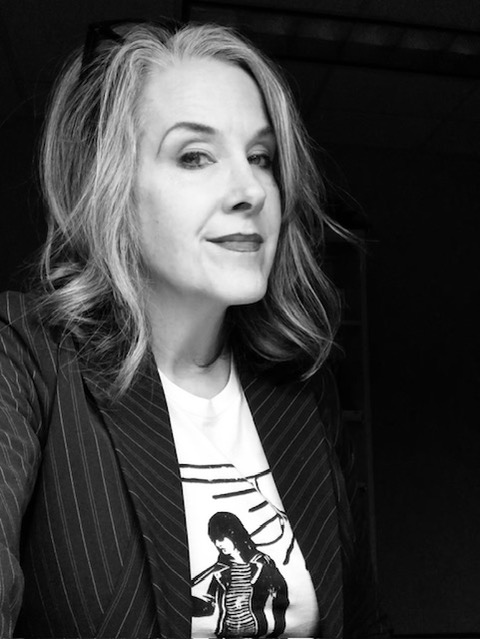
Paula Cisewski is a poet, editor, artist, educator, and curator. She is also the author of The Becoming Game (Hanging Loose Press, 2025), Quitter (Diode Editions Book Prize winner), The Threatened Everything, Ghost Fargo (Nightboat Poetry Prize winner, selected by Franz Wright), Upon Arrival, and several chapbooks. She has been awarded fellowships and residencies from or- ganizations including the Jerome Foundation, the Minnesota State Arts Board, the Oberholtzer Foundation, and Banfill-Locke Center for the Arts. To find out more about Paula’s work, visit her website.
Our editors are hard at work building Issue 33 of Superstition Review, which will launch May 1. This issue features ten poets: Anastacia Renee, CD Eskilson, Ian C. Williams, Lindsey Schaffer, Megan J. Arlett, Patricia David-Muffett, Rachel Mallalieu, Sara E. Hughes, Shehrbano Naqvi, and Tatiana Dolgushina.
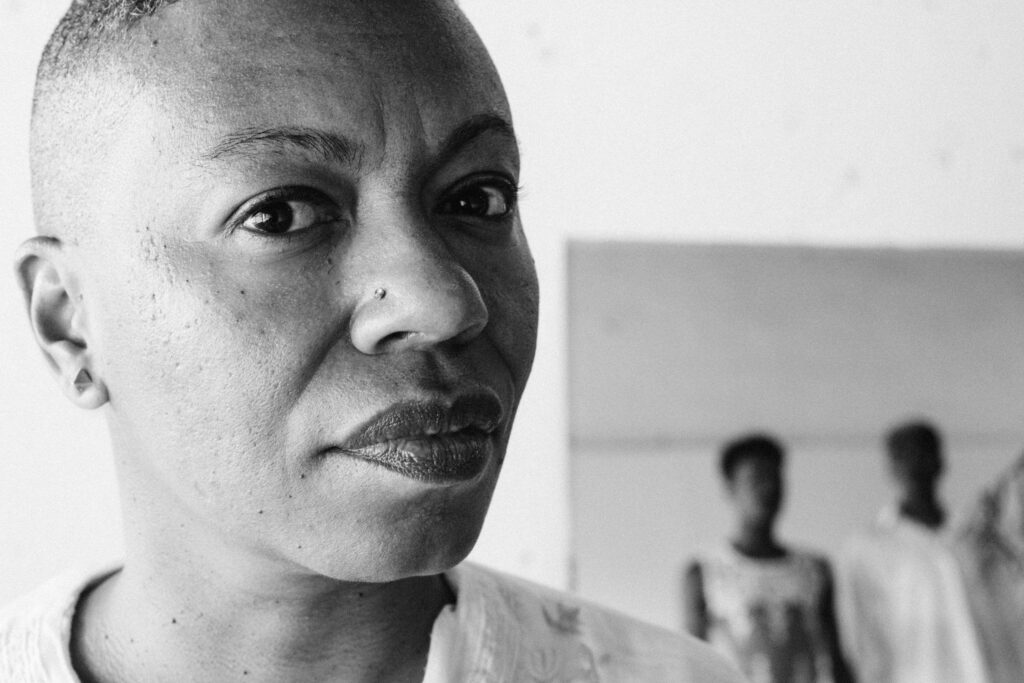
Anastacia-Reneé(She/They) is a queer writer, educator, interdisciplinary artist, playwright, former radio host, TEDX speaker, and podcaster. She is the author of Here In The (Middle) Of Nowhere,Side Notes From The Archivist,(v.) and Forget It. Sidenotes from the Archivist was selected as one of “NYPL Best Books of 2023,” and, The American Library Associations (RUSA) “Notable Books of 2024.” Anastacia-Reneé served as Seattle Civic Poet during Seattle’s inaugural year of UNESCO status as well as Hugo House Poet-in-Residence, and Jack Straw Fellowship Curator. Her work has been anthologized and published widely.
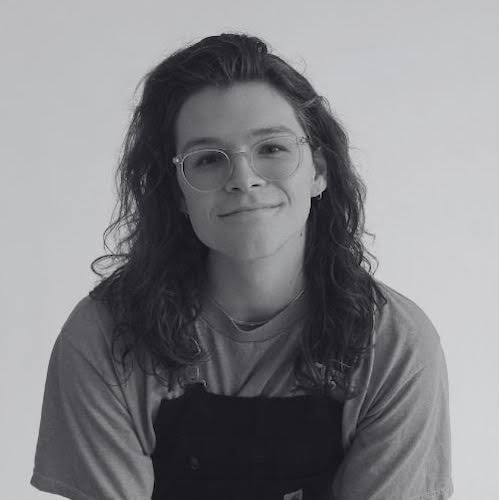
CD Eskilson is a trans poet, editor, and translator living in Arkansas. They are a recipient of the C.D. Wright/Academy of American Poets Prize, as well as a Best of the Net, Best New Poets, and a Pushcart Prize nominee. Their debut poetry collection, Scream / Queen, is forthcoming from Acre Books.
Ian C. Williams is an Appalachian poet and the author of Every Wreckage (2024 Fernwood Press). His work has been included in Fourteen Hills, Moon City Review, Salamander, and Appalachian Review, among others. He is the editor-in-chief for Jarfly: A Poetry Magazine. Williams lives with his wife and two sons in Fairmont, West Virginia.
Lindsey Schaffer is the author of City of Contradiction (Selcouth Station) and Witch City (dancing girl press, forthcoming). Her work has appeared in The Eunoia Review, Reservoir Road Literary Review, and elsewhere. Lindsey has received scholarships and fellowships from the Indiana Writers Workshop, AWP, the City of Bloomington, and the College of Saint Benedict and Saint John’s University. She serves as a poetry editor for Variant Literature.
Megan J. Arlett was born in the UK, grew up in Spain, and now lives in New Mexico. The recipient of two Academy of American Poets Prizes, her work has appeared in Best New Poets 2019, Best New British and Irish Poets, Gulf Coast, The Kenyon Review, New England Review, Passages North, and Prairie Schooner, among others.
Patricia Davis-Muffett (she/her) holds an MFA from the University of Minnesota. Her chapbook, Alchemy of Yeast and Tears, was published in spring 2023. Her work has won honors including Best of the Net nomination and second place in the 2024 Joe Gouveia Outermost Poetry Contest (selected by Marge Piercy), and appears in Best New Poets, Atlanta Review, Whale Road Review, Calyx and About Place, among others.
Rachel Mallalieu is an emergency physician and mother of five. She is the author of the chapbook A History of Resurrection (Alien Buddha Press 2022). Some of her recent work is featured or forthcoming in Nelle, Chestnut Review, Whale Road Review, and DIALOGIST.
Sara E. Hughes is a Massachusetts-born poet. She received an honorable mention for the American Poets College & University Prize in 2022. She is a 2022 Wild Seeds Writer’s Retreat Fellow and a 2022 Aspen Words participant. Sara is the recipient of the 2021 Elaine V. Beilin, Howard Hirt, and Marjorie Sparrow Awards of Framingham State University. Sara’s work is forthcoming in Obsidian: Literature & Arts in the African Diaspora. Sara is a fellow at Randolph College’s MFA program.
Tatiana Dolgushina is a Soviet immigrant, born in Soviet Russia and raised in Ukraine, Argentina, Chile, and the United States. This multilingual and multicultural identity is central to her work. Her chapbook, Carried/in our language was a finalist for the Vinyl 45 Chapbook Prize and is forthcoming from YesYes Books in 2025. A graduate of the Oregon State MFA, her writing is forthcoming or has been published in Beloit Poetry Journal, Rattle, Hayden’s Ferry Review, Hunger Mountain, New Farmer’s Almanac, the other side of hope, Collateral, and elsewhere.
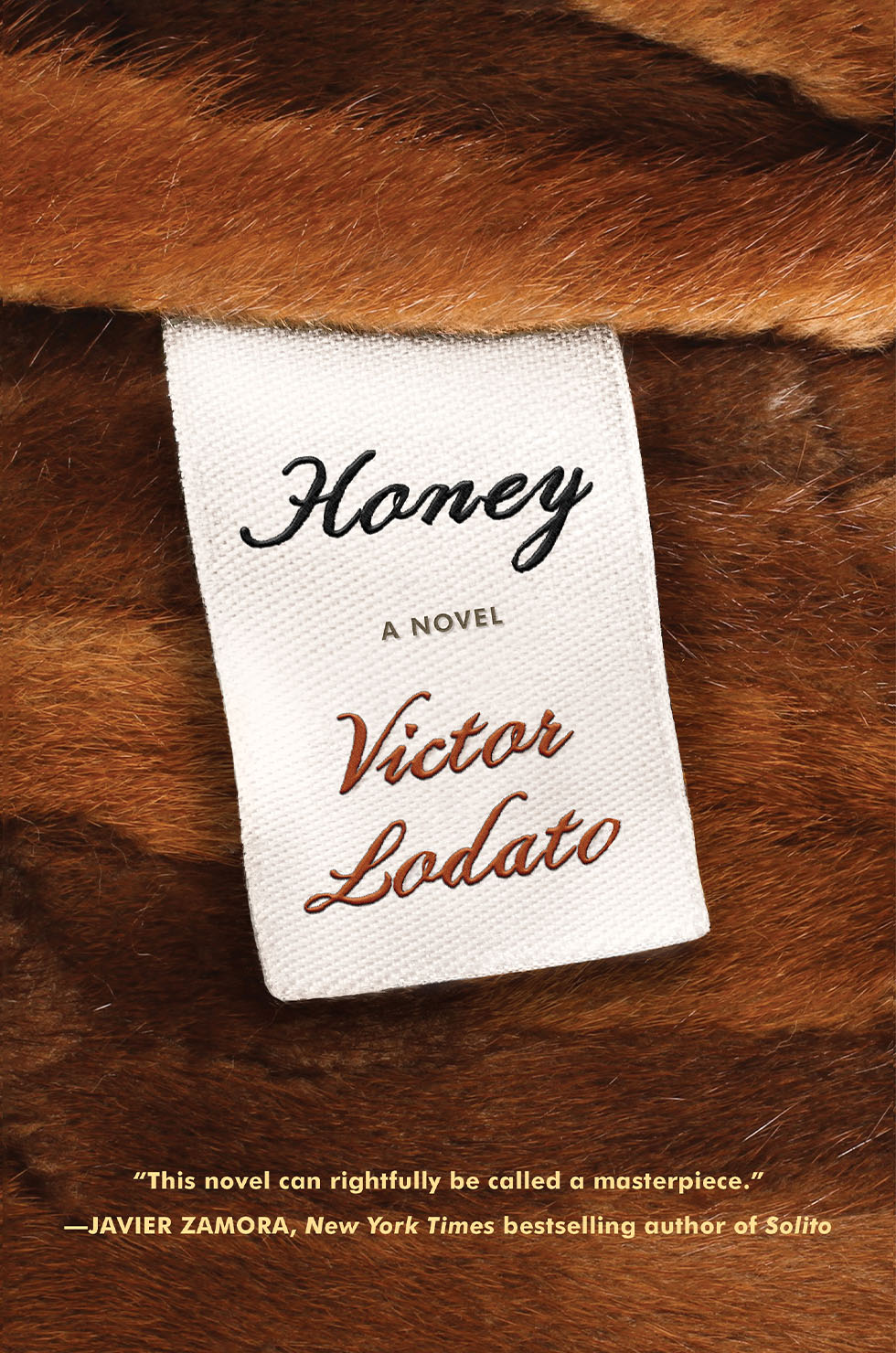
Congratulations to previous contributor Victor Lodato on the forthcoming publication of his third novel! Honey is available for preorder now from Harper Collins, and will be released on April 16th.
You can attend his book launch on Friday, April 19 at 7:00 pm in Changing Hands Bookstore (6428 S McClintock Dr, Tempe, AZ 85283). He’ll be in conversation with the amazing Javier Zamora, NY Times bestselling author of SOLITO.
She knows where all the bodies are buried.
Honey Fasinga, the glamorous daughter of a notorious New Jersey mobster, is returning home at last, ready to reckon with her violent past.
As a rebellious teenager, Honey managed to escape her father’s circle of influence and reinvent herself in a world of art and beauty, working for a high-end auction house in Los Angeles. Now in her twilight years, she decides to return home and unexpectedly falls in love. But in her family, nothing has changed. When her grandnephew Michael bursts into her life in what appears to be a drug-fueled frenzy, and her Lexus gets jacked, it’s hard to keep minding her own business. As old cruelties begin to resurface, Honey is no longer sure what she really wants—to forgive or to avenge.
Honey has already received significant praise:
“Utterly enchanting. A deeply human novel that sings the song of life itself. What a brilliant feat of empathy, style, and transcendent beauty—Lodato has created a true original in Honey.”
— Mona Awad, author of Bunny
“Rarely in literature—rarely in our lives—do we encounter someone like Honey Fasinga: fierce, complicated, and out-of-this-world sharp both inside and out. I cried, laughed, and screamed while reading this novel. Weeks after finishing, I am still looking for Honey everywhere.”
— Javier Zamora, New York Times bestselling author of Solito
Victor Lodato is the author of two critically acclaimed novels. Edgar and Lucy was called “a riveting and exuberant ride” by the New York Times, and Mathilda Savitch, winner of the PEN USA Award, was hailed as “a Salingeresque wonder of a first novel.” Mathilda Savitch also won the Barnes & Noble Discover Prize and has been published in sixteen countries. Victor is a Guggenheim Fellow, as well as the recipient of fellowships from The National Endowment for the Arts, The Princess Grace Foundation, The Camargo Foundation (France), and The Bogliasco Foundation (Italy). His short fiction and essays have been published in The New Yorker, The New York Times, Granta, and Best American Short Stories. Victor was born and raised in New Jersey and currently divides his time between Ashland, Oregon and Tucson, Arizona.
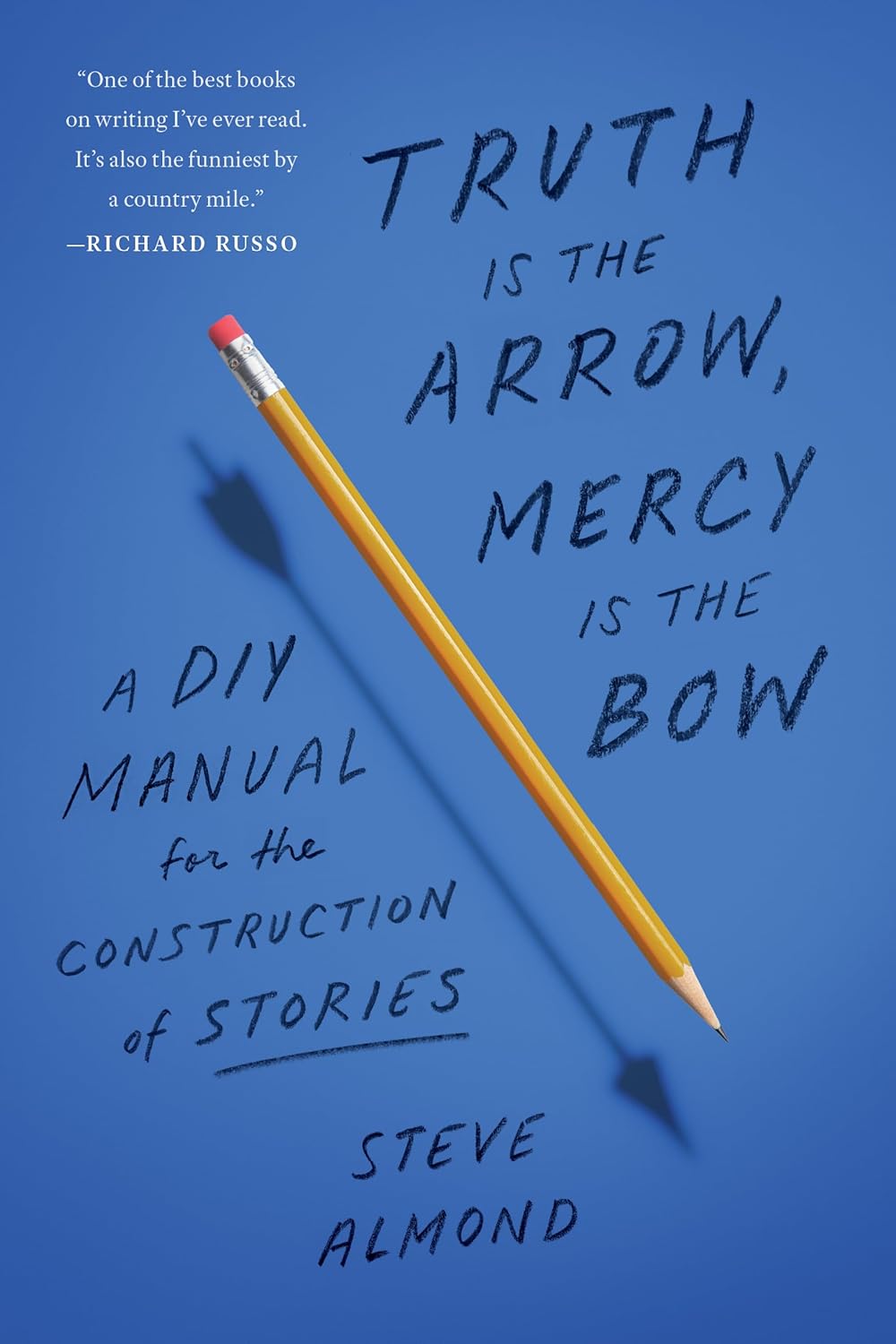
We at Superstition Review are excited to celebrate Steve Almond’s new movie and forthcoming craft book! Which Brings Me to You (2023) is available to stream now, and his book Truth Is the Arrow, Mercy Is the Bow: A DIY Manual for the Construction of Stories will be published with Zando on April 9th. It is available for preorder now on bookshop.com or Amazon.
Read our interview of Steve Almond for Issue 2 of s[r] here, where he talks about using candy as an anti-depressant and the process of writing the novel Which Brings Me to You with a co-author, Julianna Baggott.
In Truth Is the Arrow, Mercy Is the Bow, Steve Almond employs the radical empathy he displayed as co-host (with Cheryl Strayed) of the podcast Dear Sugars to explore the joys and trials of storytelling, and to explode the myths that hold us back from writing our deepest and truest work. The book includes chapters on plot, character, and chronology, but travels far beyond the earnest intentions of most craft books. It includes essays on humor, sex, writer’s block, and the dividends of failure, as well as prompts to generate new work and a rollicking Frequently Asked Questions section. You’ll never think about writing the same way again.
The long-awaited craft book has received glowing praise:
“Hilarious, heartfelt, and hopeful.”
– STAR TRIBUNE
“Truth Is the Arrow, Mercy Is the Bowis a hilarious book that will kick your writing to the next level. I salivated over it and underlined like a madwoman.”
– MARIA SEMPLE, AUTHOR OF WHERE’D YOU GO, BERNADETTE
Which Brings Me to You is a romantic comedy based on Almond and Baggott’s novel. Watch the trailer below!
Which Brings Me to You (2023)
Steve Almond is the author of eleven books of fiction and nonfiction, including the New York Times bestsellers Candyfreak and Against Football. His essays and reviews have been published in venues ranging from the New York Times Magazine to Ploughshares to Poets & Writers, and his short fiction has appeared in Best American Short Stories, The Pushcart Prize, Best American Mysteries, and Best American Erotica. Almond is the recipient of grants from the Massachusetts Cultural Council and the National Endowment for the Arts. He cohosted the Dear Sugars podcast with his pal Cheryl Strayed for four years, and teaches Creative Writing at the Neiman Fellowship at Harvard and Wesleyan. He lives in Arlington, Massachusetts, with his family and his anxiety. You can find out more about Steve on his website.
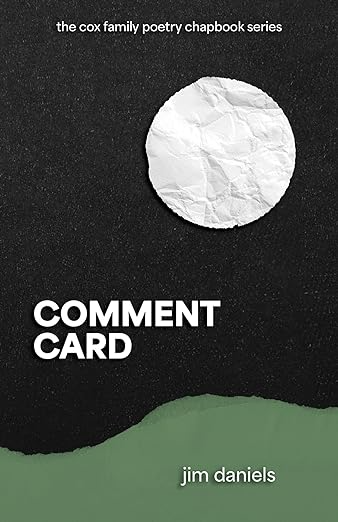
Congratulations to previous contributor Jim Daniels, on the publication of his new chapbook! Comment Card is available for purchase now through the publisher, Carnegie Mellon University Press, or on Bookshop, which supports independent bookstores.
Daniels’ poems offer up a world of juxtapositions, searching for equilibrium between the sublime and the mundane: a man watching young lovers kiss while poisoned ants rain down on his porch. A Christmas tree-needle collection and Jimmy Durante. The litter of a three-hole punch and a daughter leaving for college. Tamarinds and the International Space Station. A crushed snail and the Holy Trinity. These poems wonder, how did we get here, and, by the way, where are we?
Comment Card has already received worthy praise:
“Jim Daniels is a generous, inventive poet with great emotional range and insight. He is at home writing poems about home—the domestic space, child-rearing, marriage, aging, ambition—with honesty, intimacy, and grace . . . Jim Daniels is humorous, provocative, and smart—an American treasure.”
Denise Duhamel
“As prolific as he is talented. Jim Daniels gets my vote as ‘the hardest working man in poetry.’ His poems are honest, straightforward, full of insight, wit and goodwill, and grounded firmly in the human and the humane.”
Charles Harper Webb
You can read Jim’s story, “13 Ways of Looking at My Father in His Bathing Suit” in Issue 12 of s[r], or his story “Single Room” in our first ever issue of s[r]! We also interviewed Jim Daniels for our debut issue. You can read his interview here, where he talks about everything from the discipline factory work taught him to apply to writing, to his early writings being praised by a teacher as poetry—freaking him out and sending him temporarily on a path of “writing things that sounded like some self-pitying bad rhyming dude from the eighteenth century.”
Enjoy an electrifying preview of Daniel’s chapbook:
COMMENT CARD
Below zero—the hotel lost power— frozen lines, broken sprinklers, just when guests like us had flicked our lights off to slog our way toward sleep. Alarms blazed their grim fiery order: evacuate. The laminated Emergency Plan instructed us to gather in the parking lot and wait. Half-dressed, half-awake, we bristled at the dark betrayal. One gaunt guy in sweats and shorts jogged in place, turned zombie blue.
Someone aimed a flashlight at our frozen feet till the cleaning lady invited us to squeeze into her tiny car, then started it up. Shoulders rubbed. We did not sing songs. We shared scraps and fragments of what brought us to our lonely rooms. Bianca from house- keeping shared cookies she’d stolen for her two kids. Her English: Take.
None of us were meeting-cute. No coincidental links or sit-com jokes. The situation: I sat between an older businessman and a younger saleswoman. Bianca’s old car smelled of Jesus air freshener. Good heater, I said, and everyone agreed. Our bodies, forced together, grudged up extra heat.
The lights came on—you know that. We fled the car in a mad frigid flurry. The hotel offered us coffee and tea in the lobby. We spread out over stuffed couches. Bianca served us. The manager chatted us up. What can you do, he asked, in weather like this?
Jim Daniels has authored over thirty collections of poetry, seven collections of fiction, and four produced screenplays. His most recent books include The Luck of the Fall (2023), The Human Engine at Dawn (2022), and Comment Card (2024). His books have won three Michigan Notable Book Awards, the Brittingham Prize for Poetry, the Blue Lynx Prize for Poetry, the Tillie Olsen Creative Writing Award, the Milton Kessler Award, and three Gold Medals in the Independent Publisher Book Awards. His work has been published in The Best American Poetry and Pushcart Prize volumes.
During his long career, he has warmed up for singer-songwriter Lucinda Williams at the Three Rivers Arts Festival, read poems at a Jamestown Jammers AA baseball game, had his poem “Factory Love” displayed on a race car, and sent poetry to the moon soon as part of the Moon Arts Project. A native of Detroit, he lives in Pittsburgh, where he is the Thomas Stockham Baker University Professor Emeritus of English at Carnegie Mellon University. He currently teaches in the Alma College low-residency MFA Program. You can find out more about Jim Daniels on his website.
Our editors are hard at work building Issue 33 of Superstition Review, which will launch May 1. This issue features art from six award-winning artists: Dixie Salazar, Kathy Peterson, Slav Nedev, Kelly D Villalba, Rodney Rigby, and Nam Hoang Tran.
Dixie Salazar is an artist and writer who has shown her work extensively in the Central Valley of California also in San Francisco, Merced, Las Vegas, Oregon, and New York. She has had numerous one-person shows in Fresno, and also Merced, Turlock, and Monterey. A major show at Arte Americas in Fresno in 2006 explored Mayan symbolism in her painted collages. Dixie shows throughout California. Her latest one-person show took place at the Fig Tree Gallery in Fresno, CA. in 2021. Dixie has a studio/gallery at 654 Van Ness in downtown Fresno. She also is a published poet with seven books of poetry, the latest from Stephen F. Austin University Press called “Crosshairs of the Ordinary World” in 2023. She has also published two novels. In 2023, Dixie received a California Arts council Fellowship for her artwork.
Kathy (K. Alma) Peterson is a painter and poet. Her paintings are abstract mixed media. She has a Studio Arts minor BA from the University of Minnesota. Her MFA in Poetry is from the MFA Program for Writers at Warren Wilson College. She has published two books of poetry with Blaze Vox Books. She lives in Florida.
Slav Nedev is a freelance artist born in 1967 in Sofia, Bulgaria, where he lives and works. Through his body of work, he explores a wide range of styles and media, including painting, digital art, objects, sculptures, and installations. His latest projects examine the interplay between the inner and outer world and those eternal principles that, even if intangible, make the phenomena as we know them. Slav is currently curating a group show set to open in November 2024 and working on two solo shows scheduled for 2025.
Kelly D Villalba is a visual artist based in Los Angeles, California. In her art practice, she creates unique sculptural artworks to reimagine the idea of the traditional coiled basket. Kelly uses fiber and found material to create funky forms emphasized by contrasting colors and vivid patterns. Through her use of coiling, a weaving technique originated by Black and Indigenous artisans, she creates imaginative soft sculptures for a contemporary audience.
Rodney Rigby is the Author/Illustrator of several children’s books, all published by Hyperion, New York. He also Illustrated Paul Muldoon’s The Last Thesaurus. His Art has been shown in the US, UK and Europe. For the past year Rodney has been Artist in Residence at his local library in Liverpool. Helping make art more accessible to adults and children alike.
Nam Hoang Tran is a multidisciplinary artist based in Orlando, FL. His work appears or is forthcoming in Posit, The Brooklyn Review, ANMLY, New Delta Review, Tagvverk, Always Crashing, and Diode, among others. With Henry Goldkamp, he co-edits TILT – a journal of intermedia poetics.
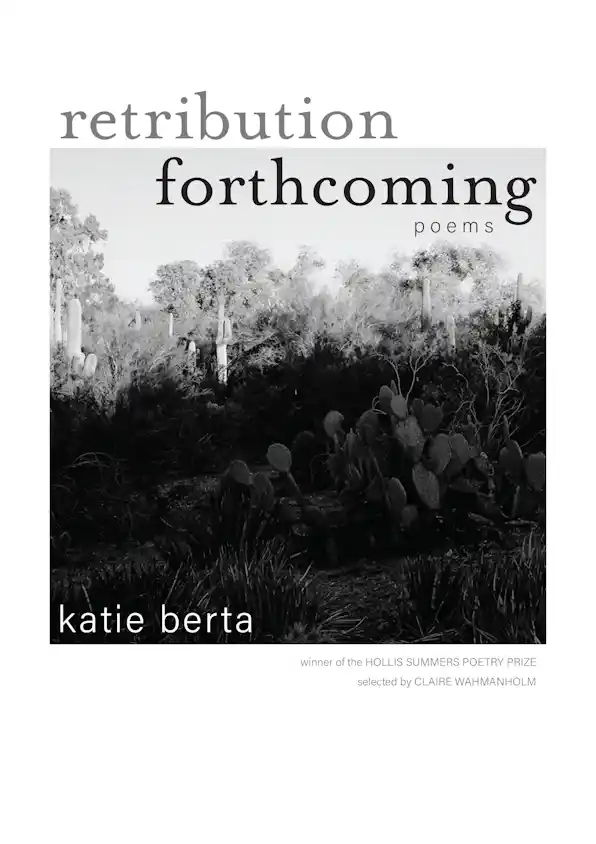
Congratulations to Katie Berta on the publication of her first poetry collection! retribution forthcoming is available now from Ohio University Press or your local bookstore. You can attend the book’s launch in Arizona on Monday, April 15th at 7 p.m. at Changing Hands Tempe (6428 S McClintock Dr, Tempe, AZ 85283), which will feature Dexter Booth and Justin Petropoulos as co-readers.
In the lineage of New York School poets like Alice Notley and Bernadette Mayer, retribution forthcoming does its exploratory work through narrative and lyric modes, by simile and catalogue. By turns oblique and direct, Katie Berta’s poems look vulnerably and honestly at sexual coercion and the psychological fallout of assault. These poems move through academic, public, and domestic spaces— and through the domain of memory—investigating the ways consumerist society reinforces and reifies gender conformity and performativity. The world of these poems and their trauma narrative is woven through and deepened by the heartful speaker’s sense of humor and eagerness to love and trust.
For readers interested in interrogating ecological, capitalist, gendered, and private violence, for sensitive and intuitive listeners, and for lovers of poets like Natalie Scenters-Zapico, Jay Hopler, and Paisley Rekdal, retribution forthcoming is an inspired and visionary debut.
retribution forthcoming is the recipient of the Hollis Summers Poetry Prize! That is only the beginning of the praise it has received:
“retribution forthcoming fuses the abject with the sincere, the tender with the perverse. Katie Berta’s voice is straight-up. Bare-faced. Flat-out. She catalogs both the worthwhile and the intolerable, and the result is exhilarating: a killing bite into the marrow of whatever it is we think we’re doing here.”
Claire Wahmanholm, author of Meltwater: Poems
“Katie Berta reminds us ‘the world is a fight’ and these poems refuse to pull punches. In retribution forthcoming, sarcasm collides with an exhaustion of the patriarchal clutch on society as well as the stark realities of womanhood, poethood, and traumas rife with contention and devastation to the human psyche.”
Felicia Zamora, author of I Always Carry My Bones
“These poems roil with thought and with dogs and with media-glut. They overflow with fear and love; devastating events and numb, weak aftermaths; what to eat, or slather into your insufficient skin: and still their capacities for humor, for tenderness– their raw courage in the face of a virulent internal naysayer—thrill and buoy us.”
Sally Ball, author of Hold Sway
Katie Berta’s debut poetry collection, retribution forthcoming, won the Hollis Summers Prize and will be published by Ohio University Press in 2024. Her poems have appeared or are forthcoming in Ploughshares, The Cincinnati Review, The Kenyon Review, Prairie Schooner, Denver Quarterly, The Yale Review, The Massachusetts Review, and Bennington Review, among other magazines. She has received residencies from Millay Arts, Ragdale, and The Hambidge Center, fellowships from the Vermont Studio Center and the Virginia G. Piper Center for Creative Writing, and an Iowa Review Award. She is the managing editor of The Iowa Review and teaches literary editing and poetry at the University of Iowa and Arizona State University. You can find out more about Katie on her website.